Uganda: Bwindi Gorilla Trekking
Feb 2026
Into the Heart of Bwindi: A Journey to Meet the Mountain Gorillas
Few wildlife encounters truly change the way you see the world. Gorilla trekking in Uganda's Bwindi Impenetrable National Park is one of them.
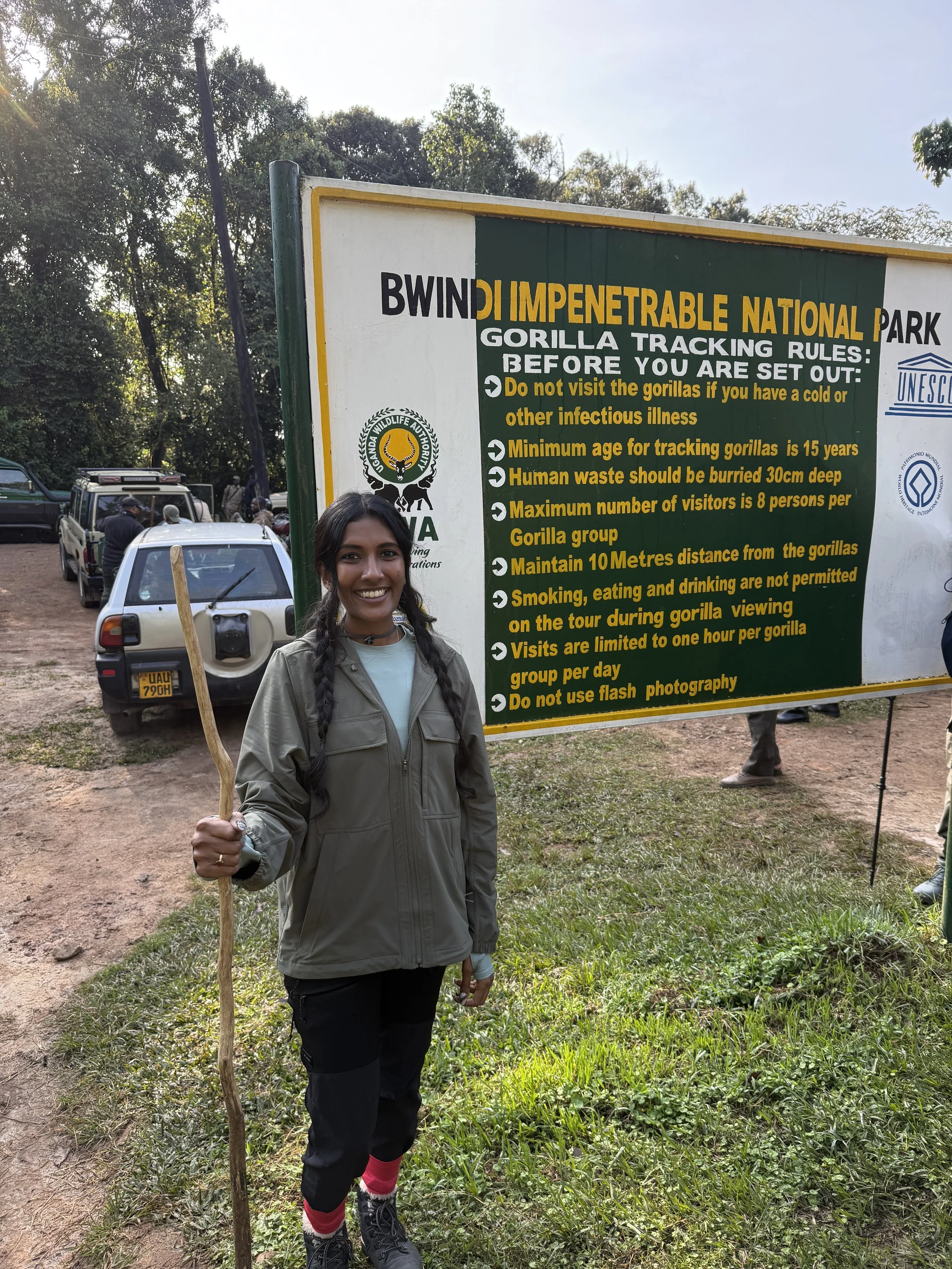
At 0800, we arrived at the park headquarters in the Rushaga Sector, where fellow trekkers gathered over steaming cups of coffee, exchanging nervous smiles and quiet excitement. Known as one of the best sectors in Bwindi Impenetrable National Park for gorilla sightings, Rushaga is home to several habituated gorilla families, offering excellent opportunities for an unforgettable encounter. While waiting for the briefing to start we were entertained by a group of Batwa indigenious people, showcasing their culture and wishing us luck on our trek!
As we were just beginning our day, the park's experienced trackers had already ventured deep into the rainforest at 5:00 a.m. Their mission was to locate the gorillas' overnight nests and follow fresh signs through the dense vegetation. Throughout the morning, they remained in constant communication with our guides via walkie-talkies, relaying the gorillas' movements and allowing each trekking group to be directed as efficiently as possible.
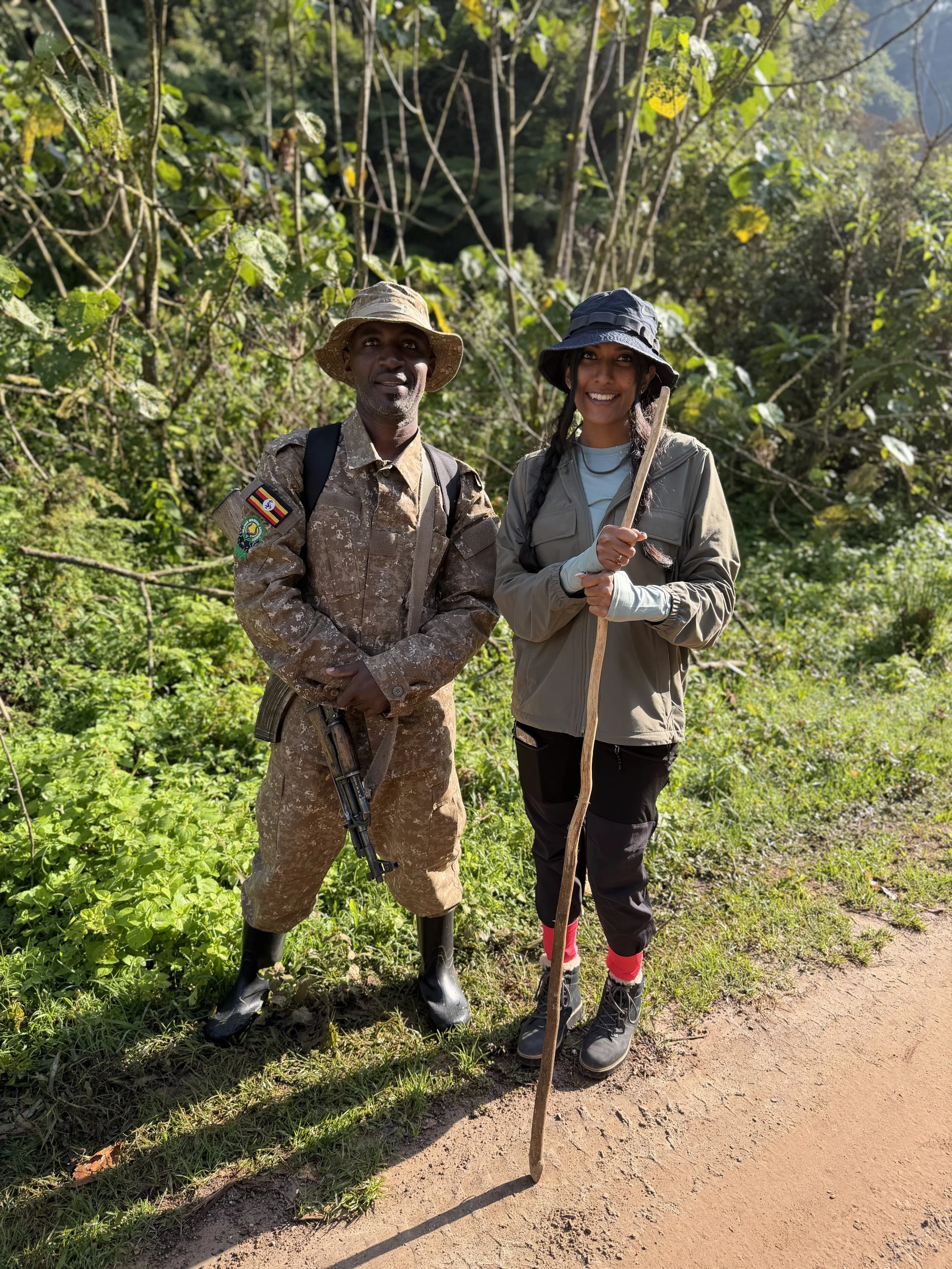
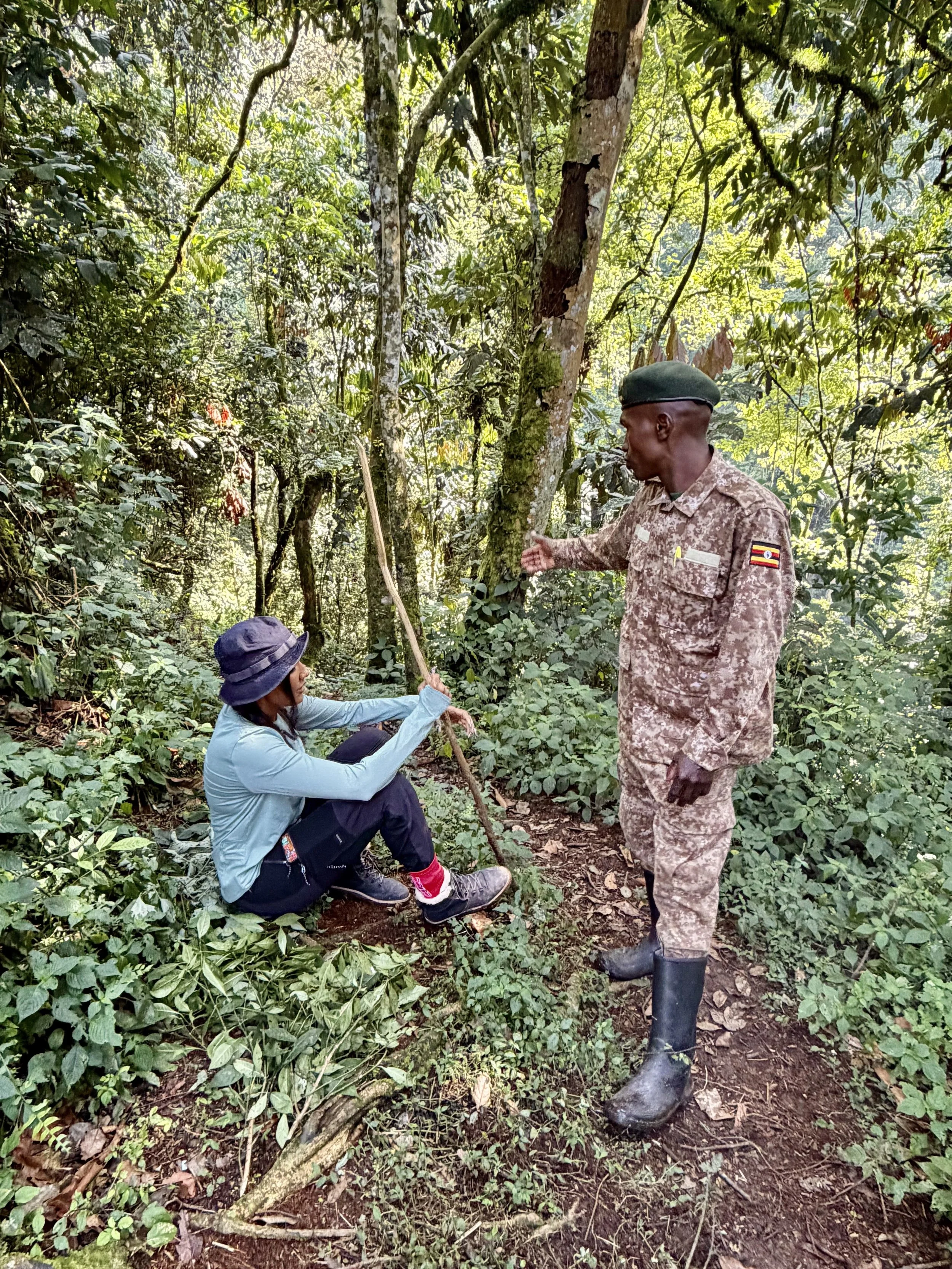
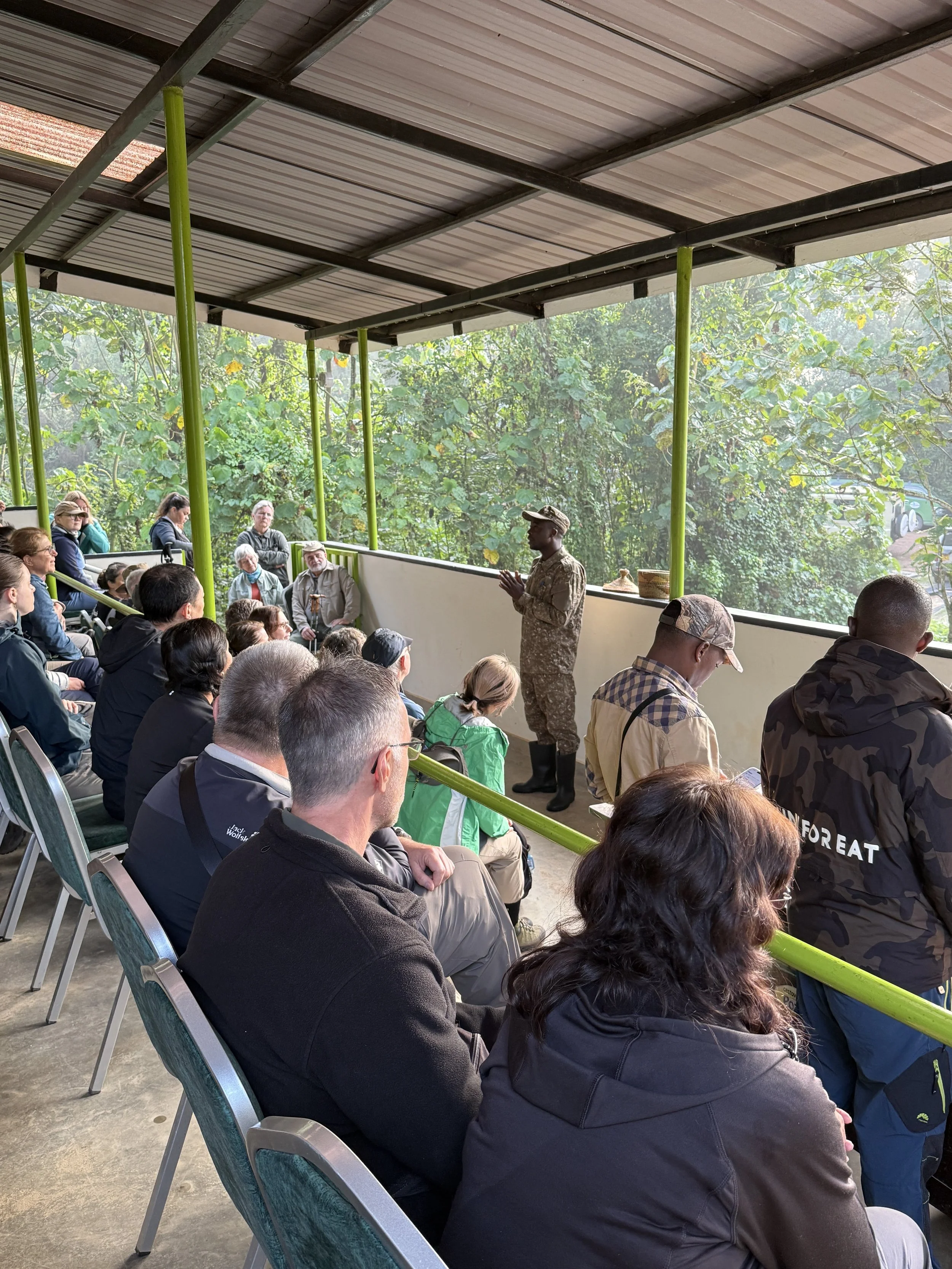
After a briefing on gorilla trekking etiquette and the importance of protecting one of the world's last remaining populations of endangered mountain gorillas, we were assigned to one of the habituated gorilla families ( The Kutu Family). Each trekking group was limited to just 10 visitors—a strict conservation measure that minimises stress on the gorillas while creating a far more intimate wildlife experience. Accompanying our group were two experienced ranger guides, who led us through the dense rainforest while sharing insights into the gorillas' behaviour, the surrounding ecosystem, and ongoing conservation efforts. For our safety, we were also escorted by two armed Uganda Wildlife Authority rangers carrying AK-47 rifles. Although mountain gorillas themselves are generally peaceful, the armed escorts are there to protect trekkers from other wildlife, such as forest elephants or buffalo, should the need arise.
The moment we stepped beneath the rainforest canopy, everything changed.
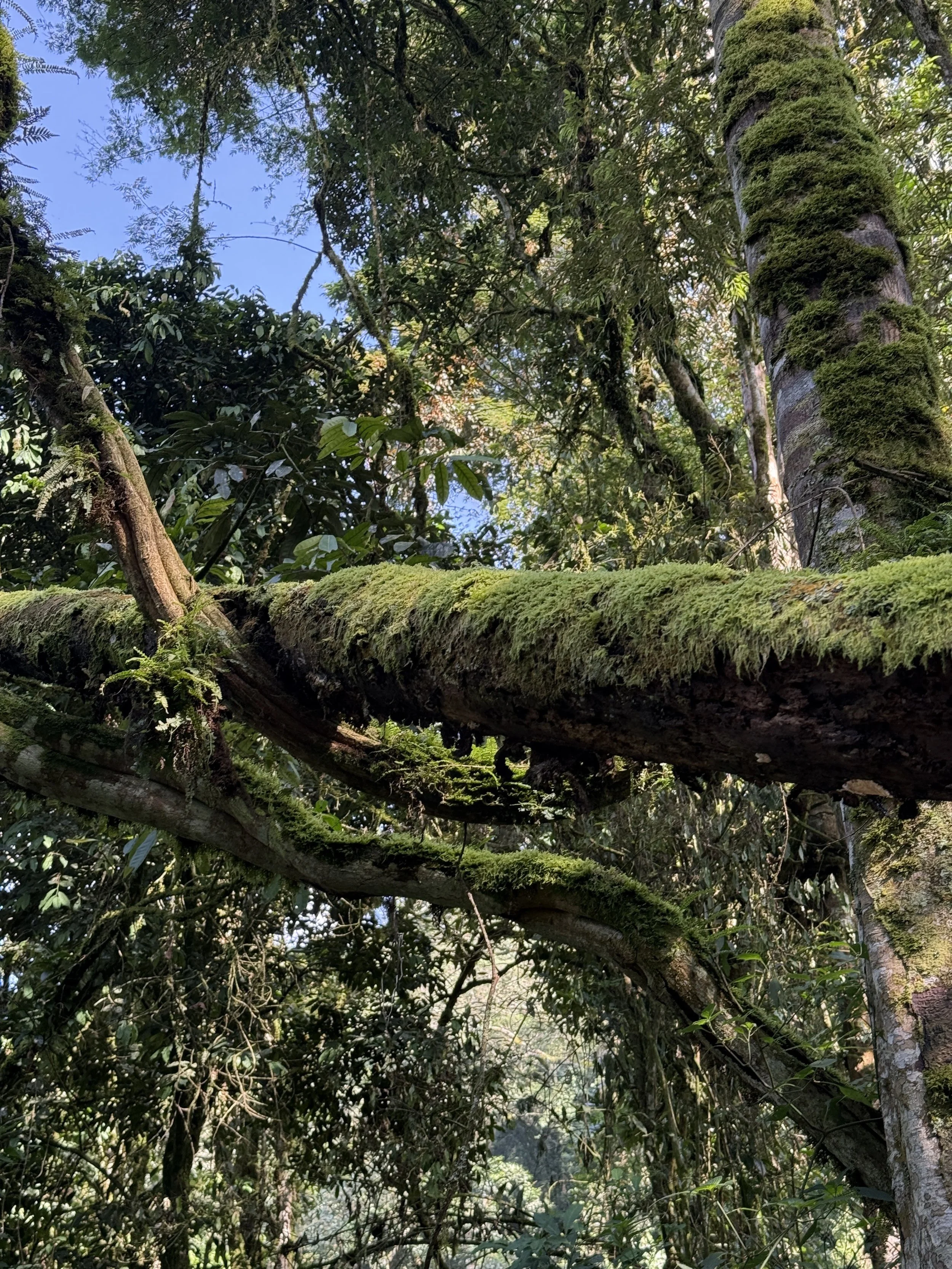
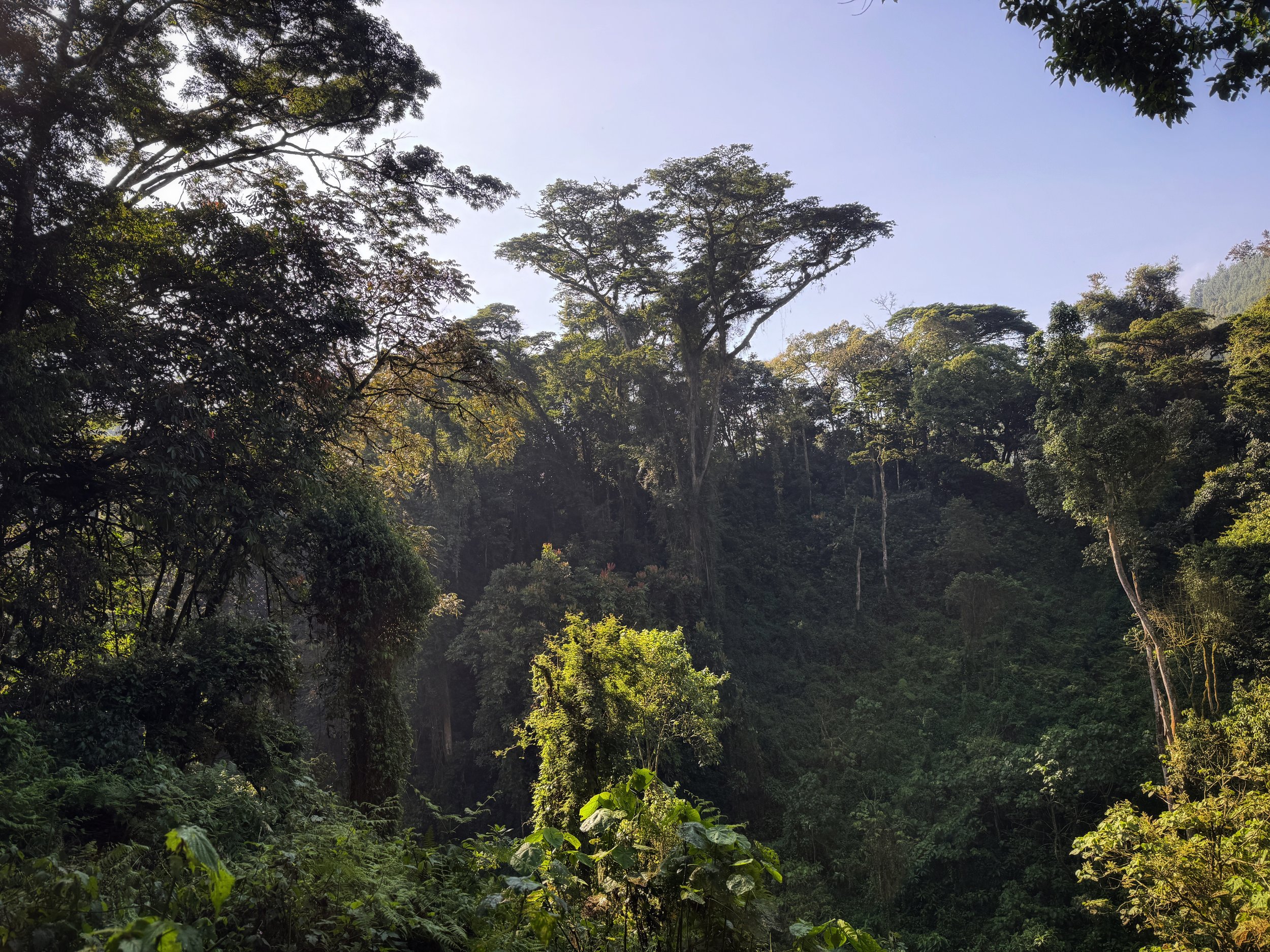
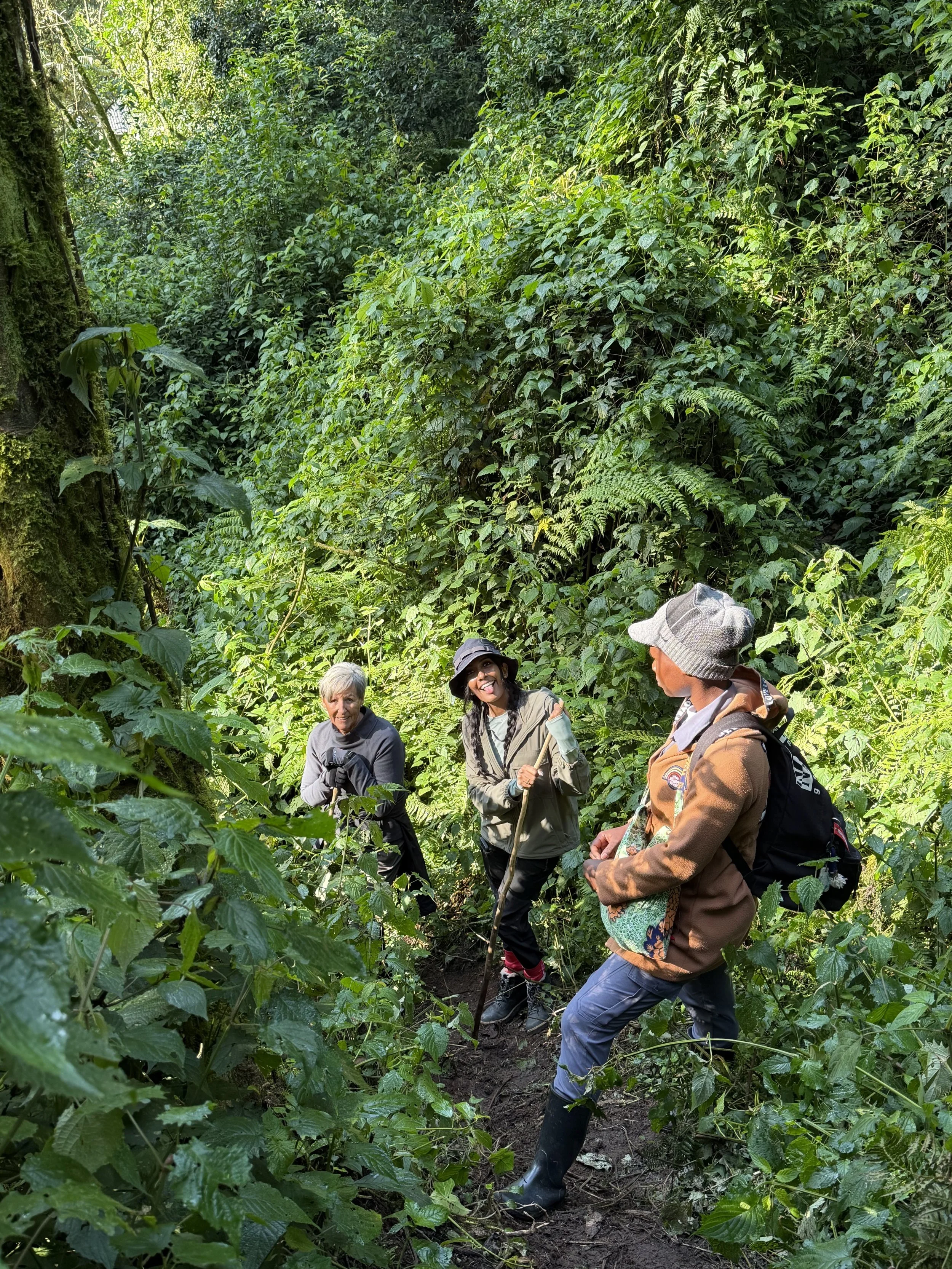
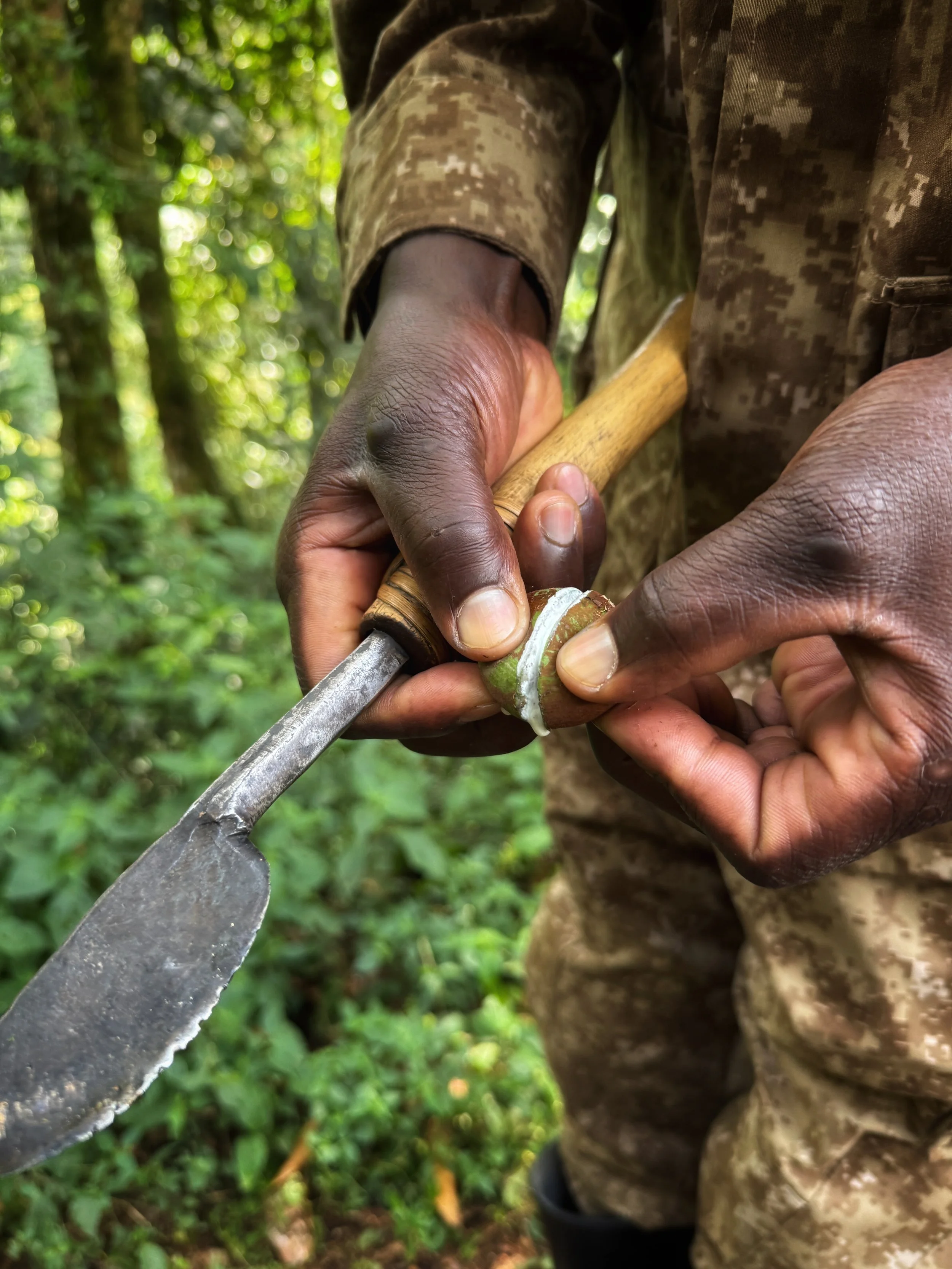
The forest immediately lived up to its name. Towering trees blocked much of the sunlight, vines draped across the trail, and thick vegetation surrounded us from every direction. There was no manicured hiking path—only a route carved out by experienced rangers using machetes as we climbed over tangled roots, navigated slippery slopes, and carefully crossed muddy streams.
The soundtrack of the forest was unforgettable. Birds called from the treetops, insects hummed endlessly, and leaves rustled with life just beyond our sight. Every so often, our guide would pause to point out broken branches, half eaten figs or signs that the gorillas had passed through only hours before. With every clue, the anticipation grew.
As if the rainforest wanted to remind us who was truly in charge, dark clouds gathered overhead and, within minutes, the skies opened. Rain poured relentlessly through the canopy, soaking us from head to toe despite our waterproof jackets. The once-firm trail transformed into slippery mud, each uphill step followed by the risk of sliding two steps back. Boots became caked in thick clay, trekking poles sank into the earth, and laughter quickly replaced any hope of staying dry.
Oddly enough, the downpour made the experience even more unforgettable. The rain intensified the earthy scent of the forest, awakened the chorus of birds and insects, and wrapped Bwindi in an almost mystical atmosphere. We embraced the discomfort, knowing that this was the rainforest in its purest form—untamed, unpredictable, and completely authentic.
Hours passed without a single glimpse of a gorilla. Instead, the anticipation grew with every footprint, every broken stem, and every whispered update from the trackers ahead. It wasn't about reaching a destination anymore. The journey itself had become part of the experience.
The rain had only just begun to ease when our guide motioned for us to stop. Hidden among the dense foliage, the dominant silverback Kutu sat quietly beneath the canopy, seemingly unbothered by our presence. He methodically plucked leaves from nearby branches, eating with an almost meditative calm. For several minutes, we simply watched in silence, careful not to disturb the family going about their morning.
Then, in an instant, everything changed. Without warning, he surged from the bushes with astonishing speed. He charged a short distance toward us, his powerful arms carrying him effortlessly across the forest floor before he rose slightly and pounded his chest with a deep, resonating rhythm that echoed through the trees. The sound was unlike anything I had ever heard—raw, commanding, and enough to make every heartbeat pause.
No one moved.
Just as quickly as it had begun, the display was over. Kutu stopped, glanced in our direction as if to remind us whose home we were visiting, then calmly turned around and disappeared back into the vegetation. Moments later, he resumed feeding as though nothing had happened. As the tension faded, the family returned to their daily routines. Curious juvenile gorillas tumbled through the undergrowth, playfully chasing one another, climbing low branches and wrestling with the carefree energy of children. Nearby, a mother sat calmly with her tiny infant nestled against her chest, patiently grooming and cradling her baby between feeds. Watching the infant cling tightly to its mother's fur before peeking curiously at the world around it was a touching reminder of how closely their family bonds mirror our own.
It was a privilege to witness both the gentleness and complexity of these remarkable animals—from the playful antics of the youngsters and the quiet devotion between mother and infant to the unwavering confidence and dignity of the silverback who stood watch over them all. I was also personally blessed to be assigned the same gorilla family my late aunt visited many years ago. In that single hour, we experienced a rare glimpse into a family whose lives have remained largely unchanged for generations, deep within the ancient forests of Bwindi.
Field Notes :
Gorilla trekking permits cost 800 USD pp. (discounted to US$600 during the low season of April, May and November for foreign non-residents). Apply through your safari provider. Everything is taken care of
Porters: You may hire porters for a fee of 20 USD
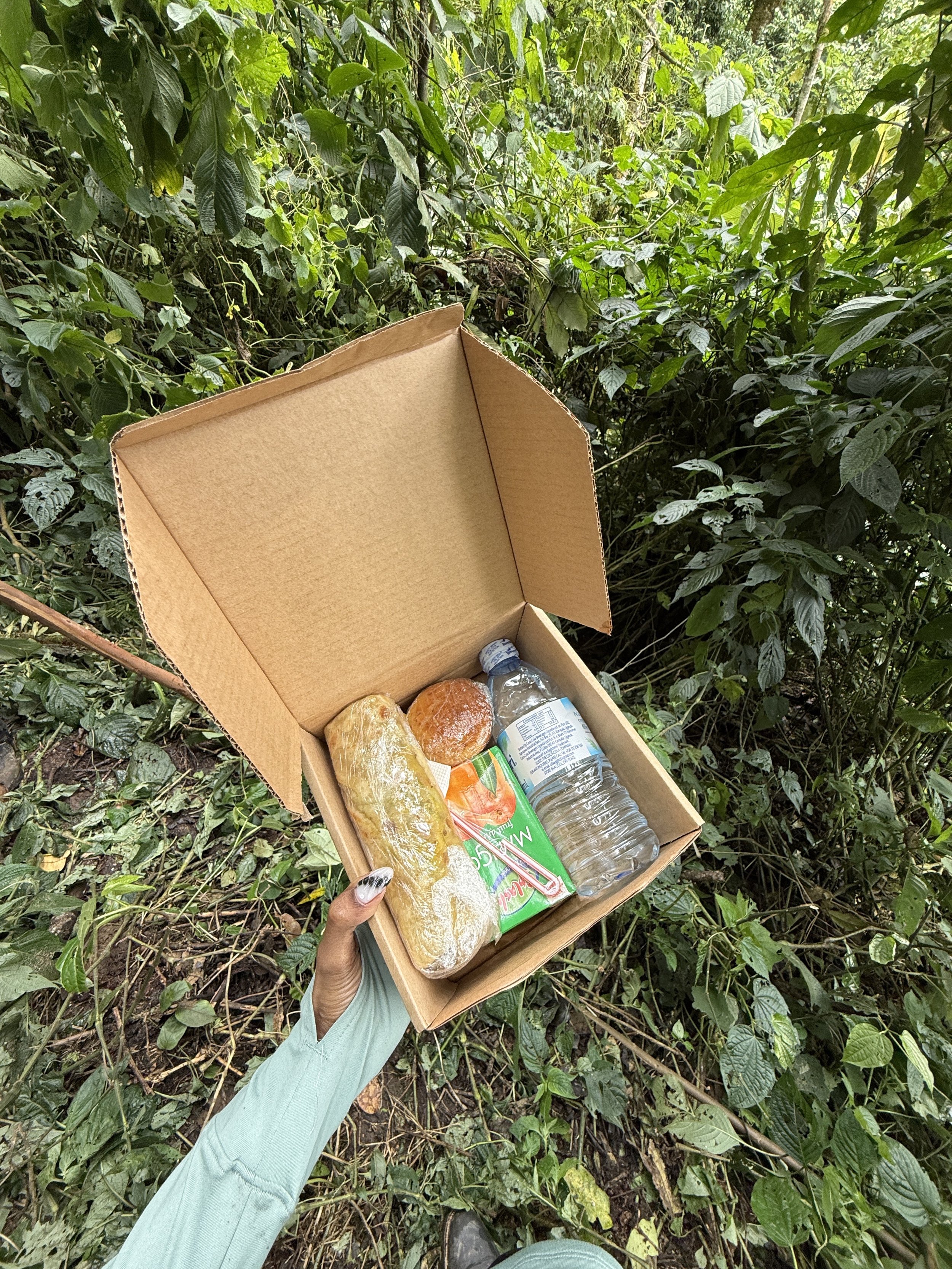
Packed lunch is provided for lunch breaks during the trek from your lodge. They do have veg and non veg options
Waterproof everything. The rain is not to be underestimated
Book an extra night after returning from your trek. Due to the rain our trek averaged about 6 hrs instead of the usual 3. We were soaked and tired yet had to travel to our next destination :(
Recommended for reasonably fit adults
Tipping : Carry small change with you during the trek. A reasonable amount to set aside is US$50–70 in cash, broken down into smaller denominations. This typically covers: Porter: US$10, Guide: US$15–20, Armed rangers: US$10–20 total, Trackers or pooled staff tip: US$5–10
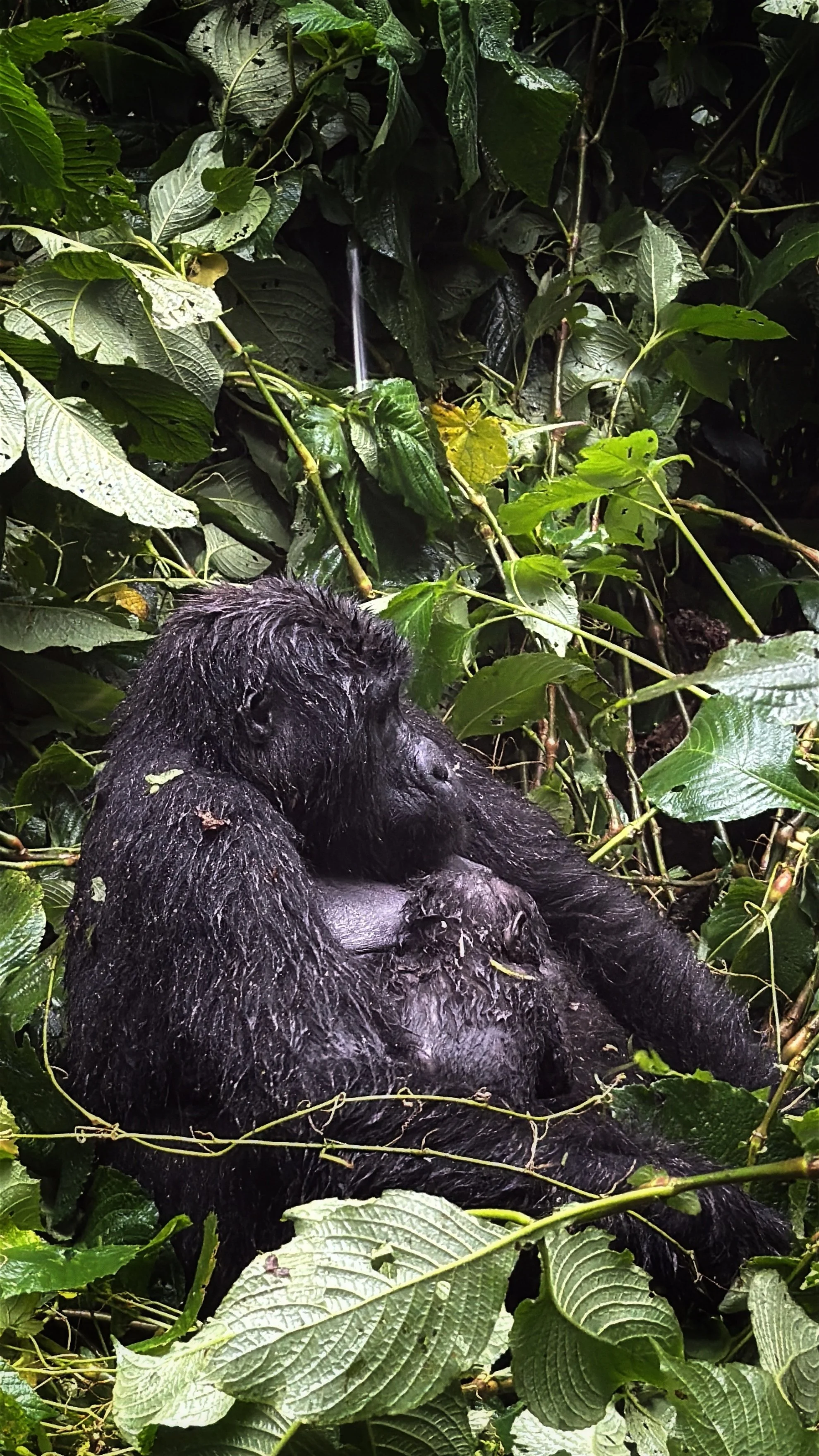
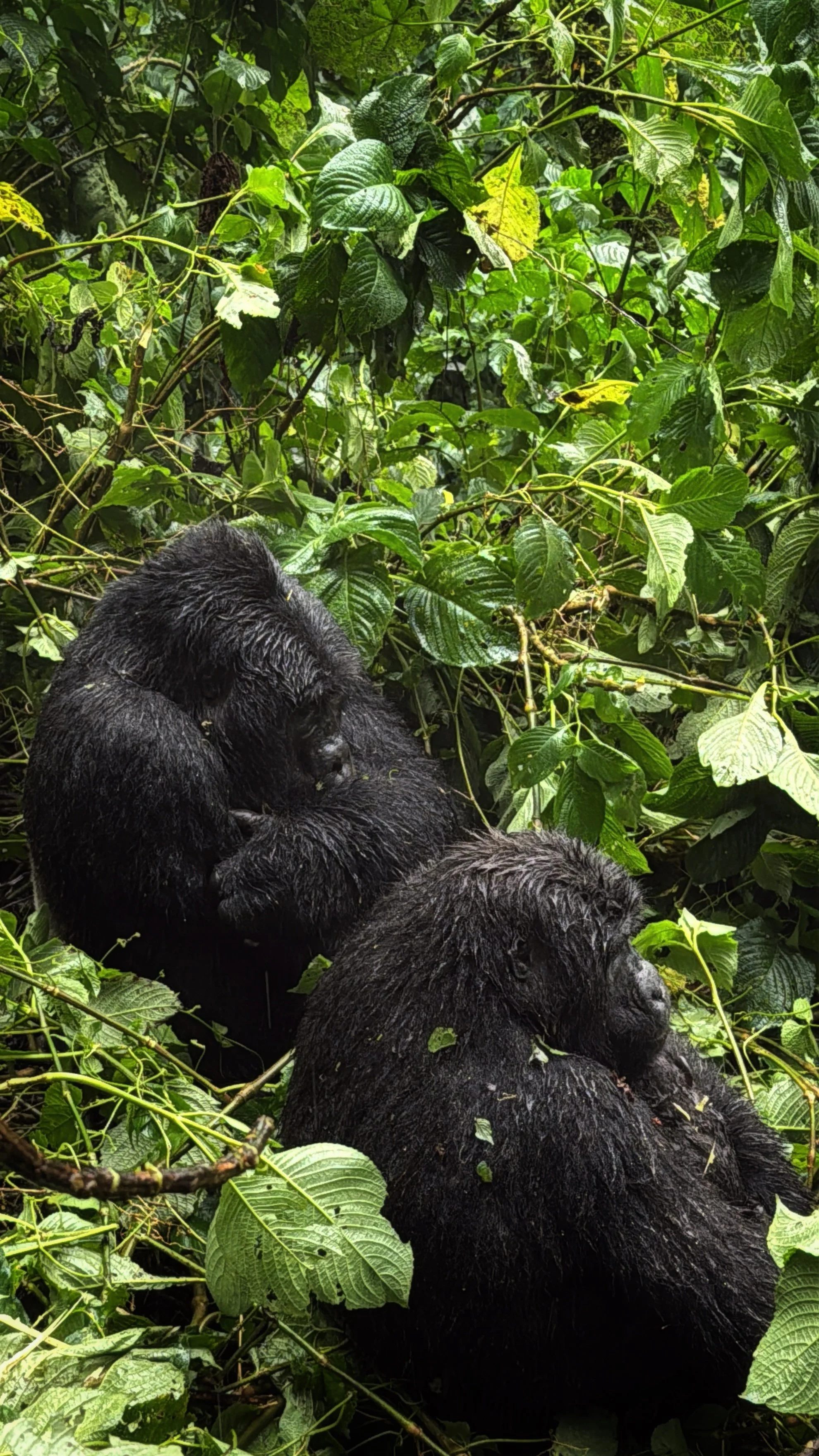
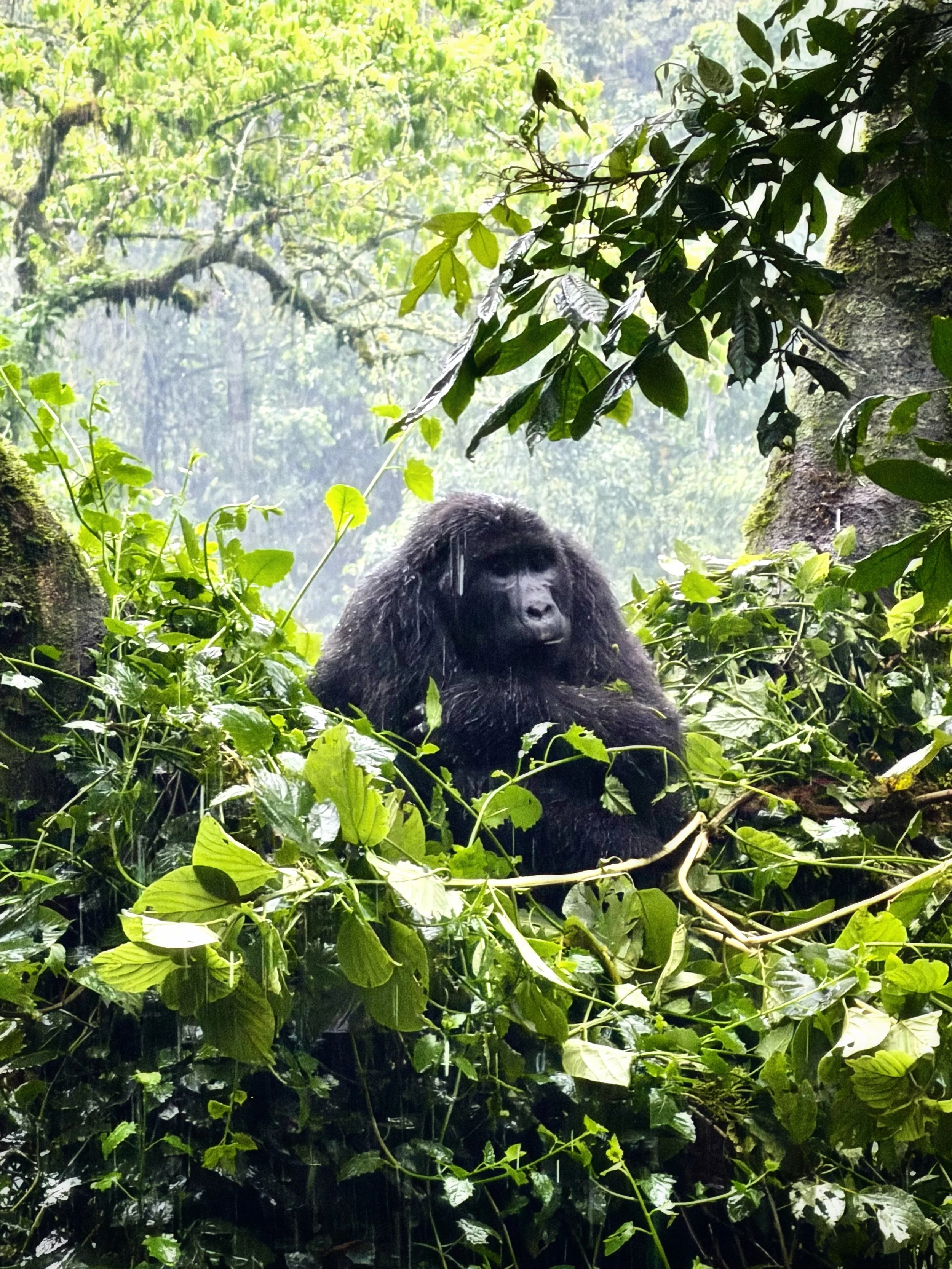
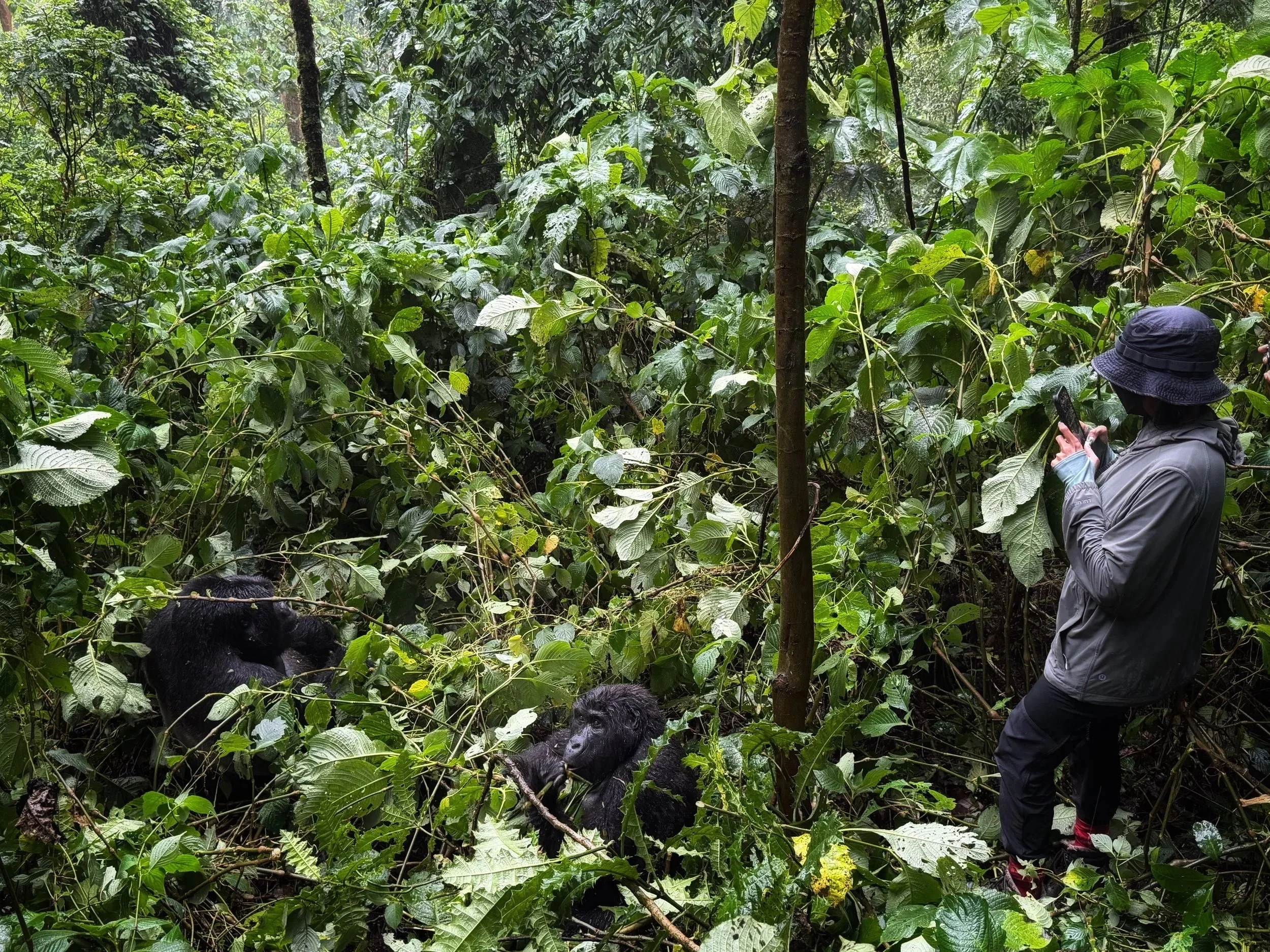
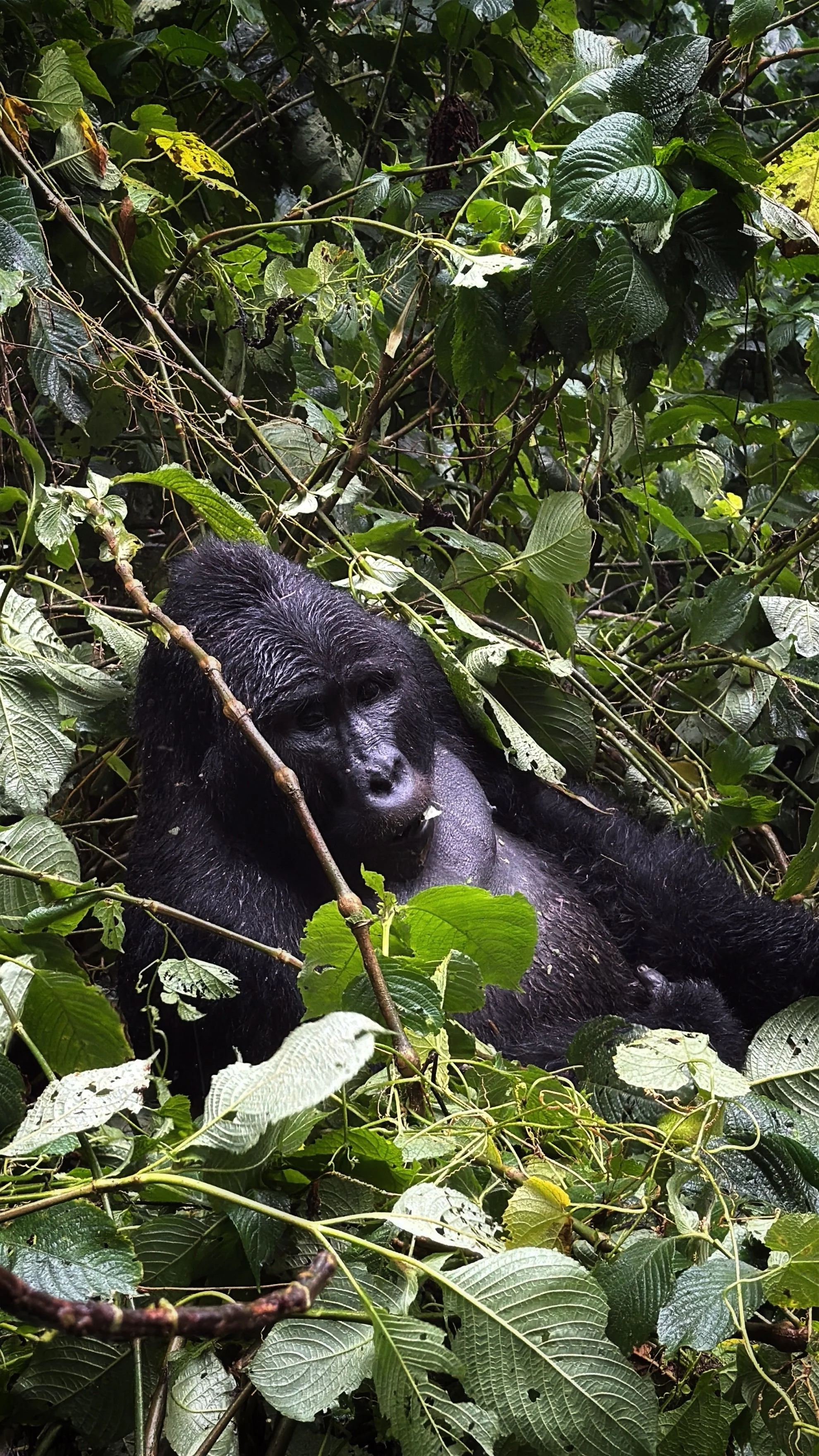
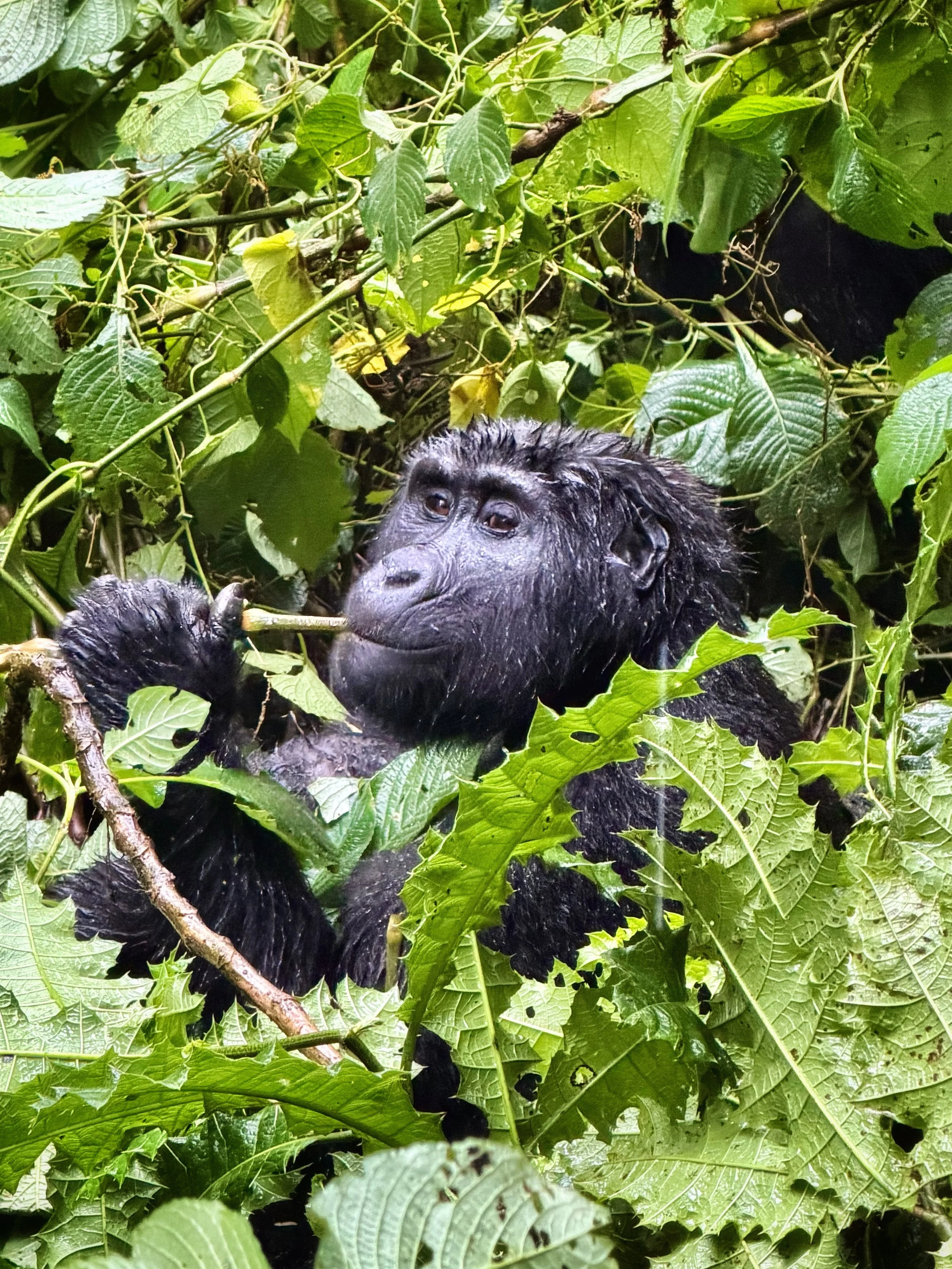
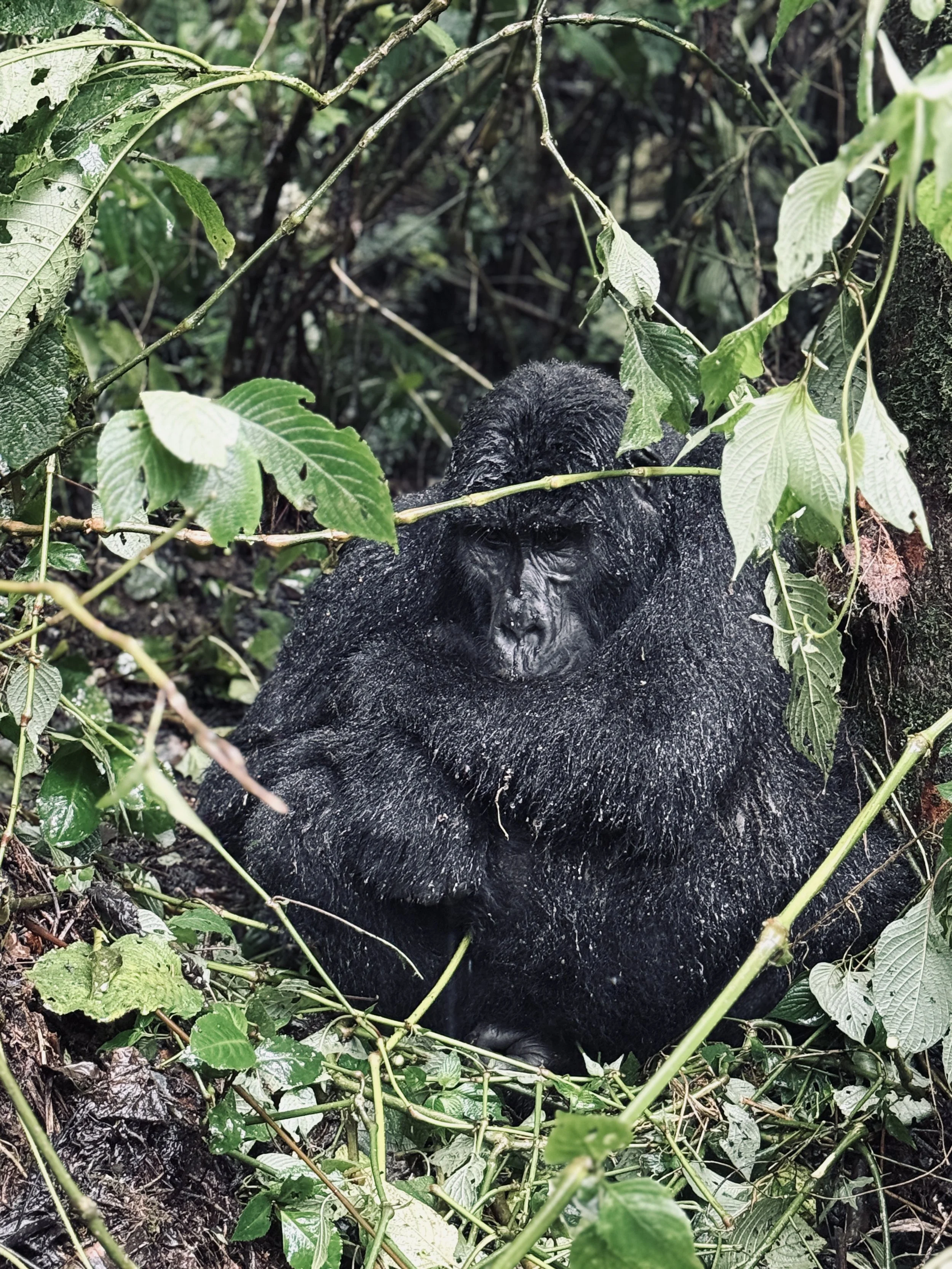
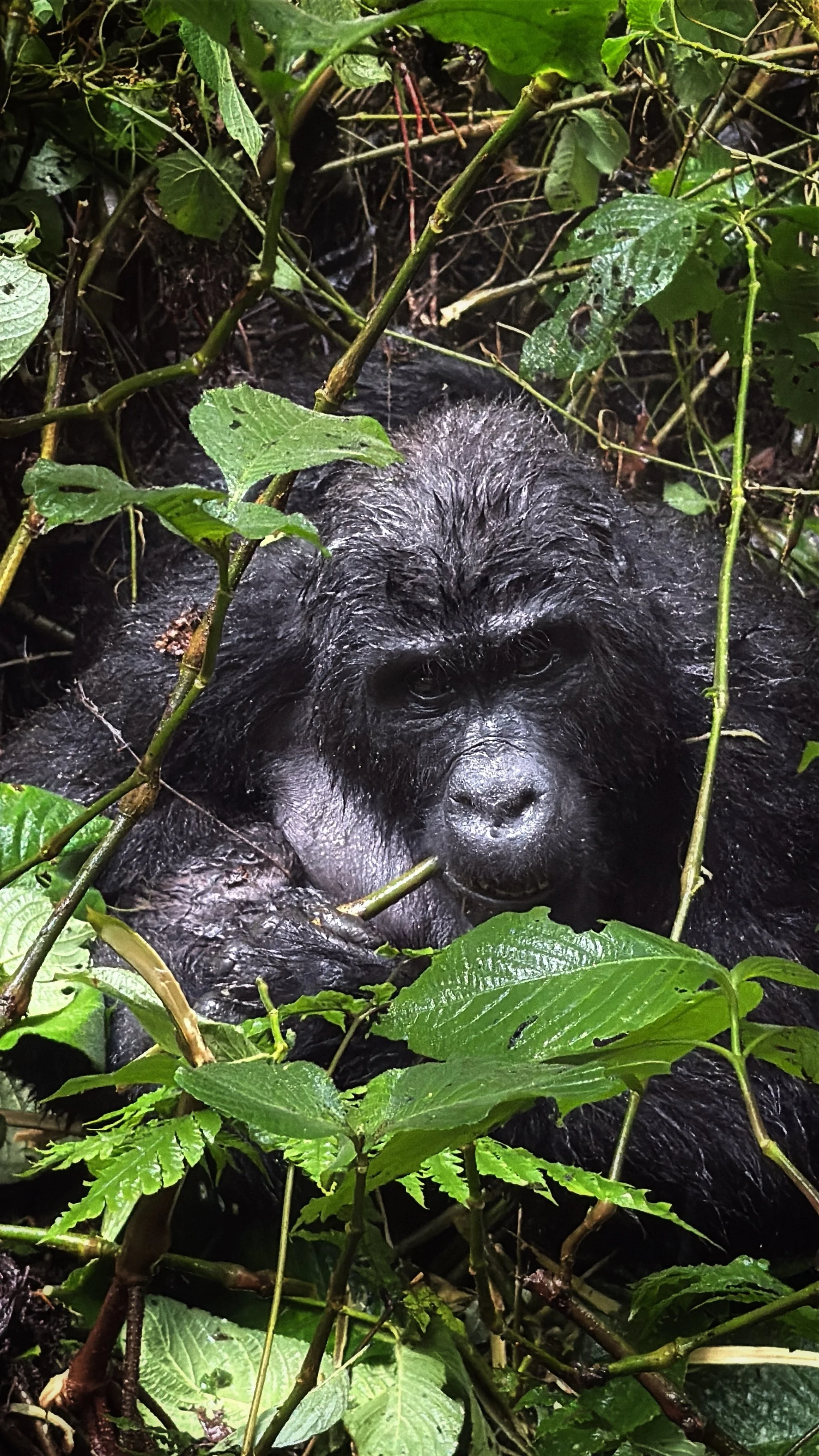
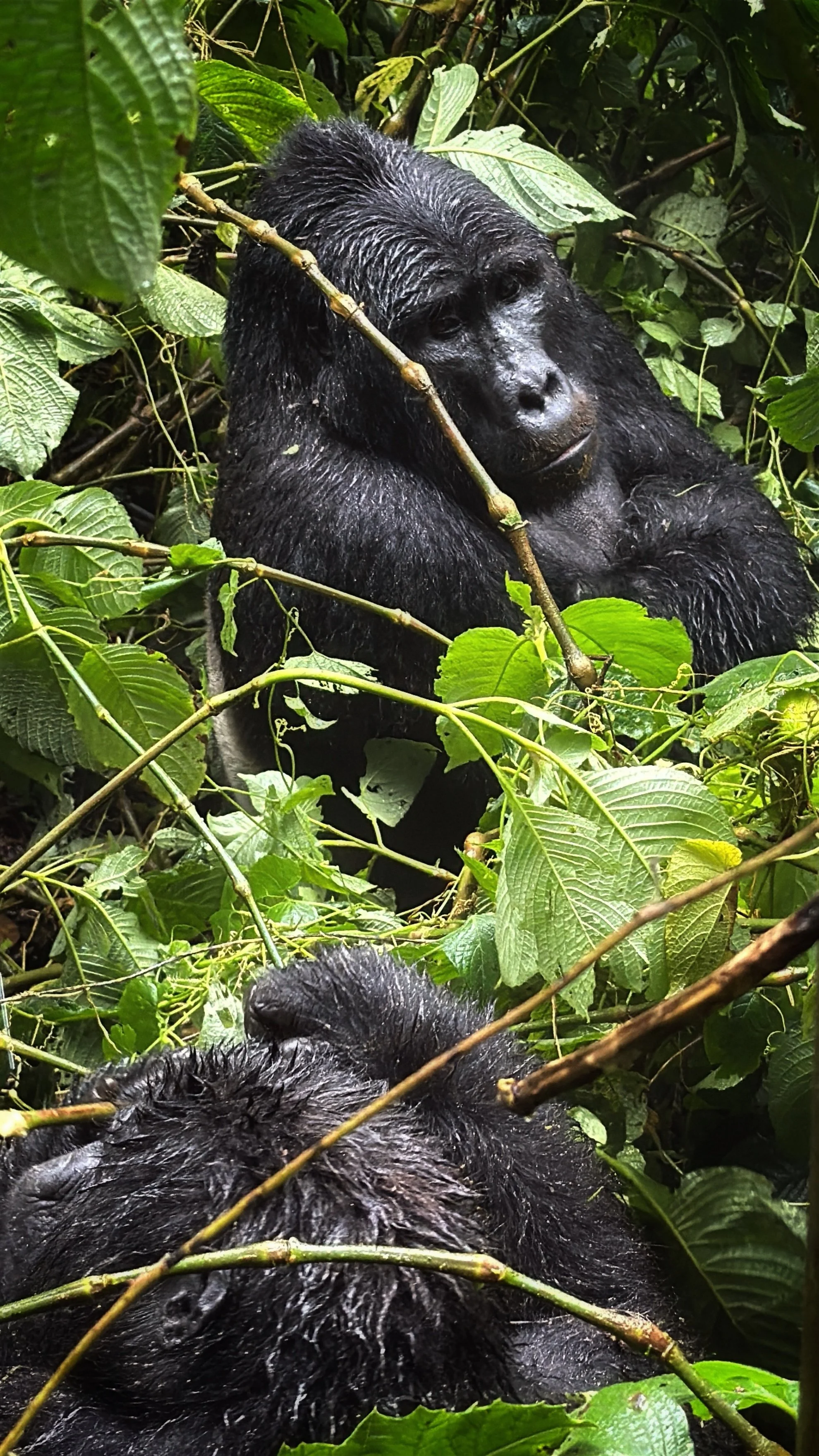
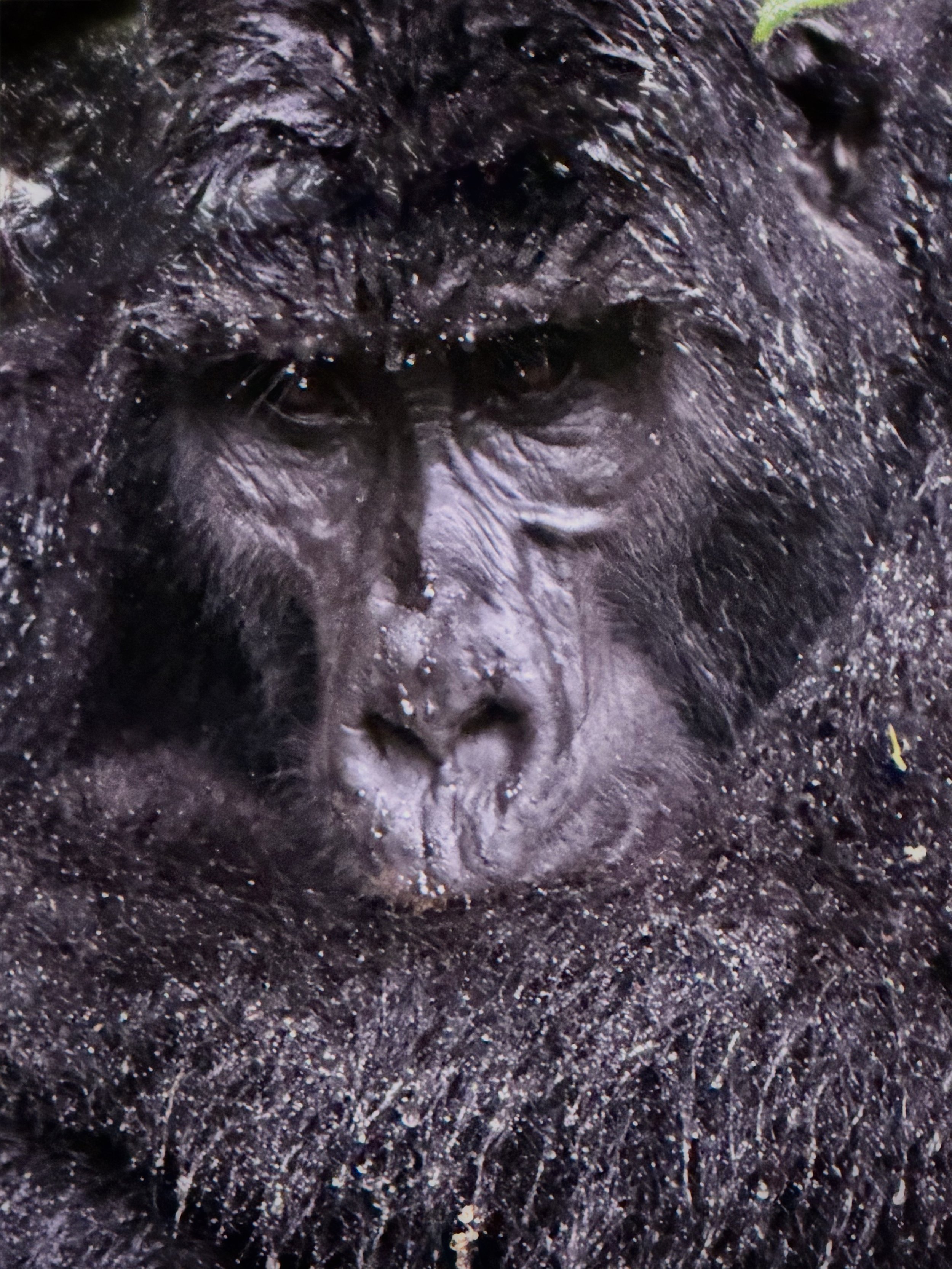
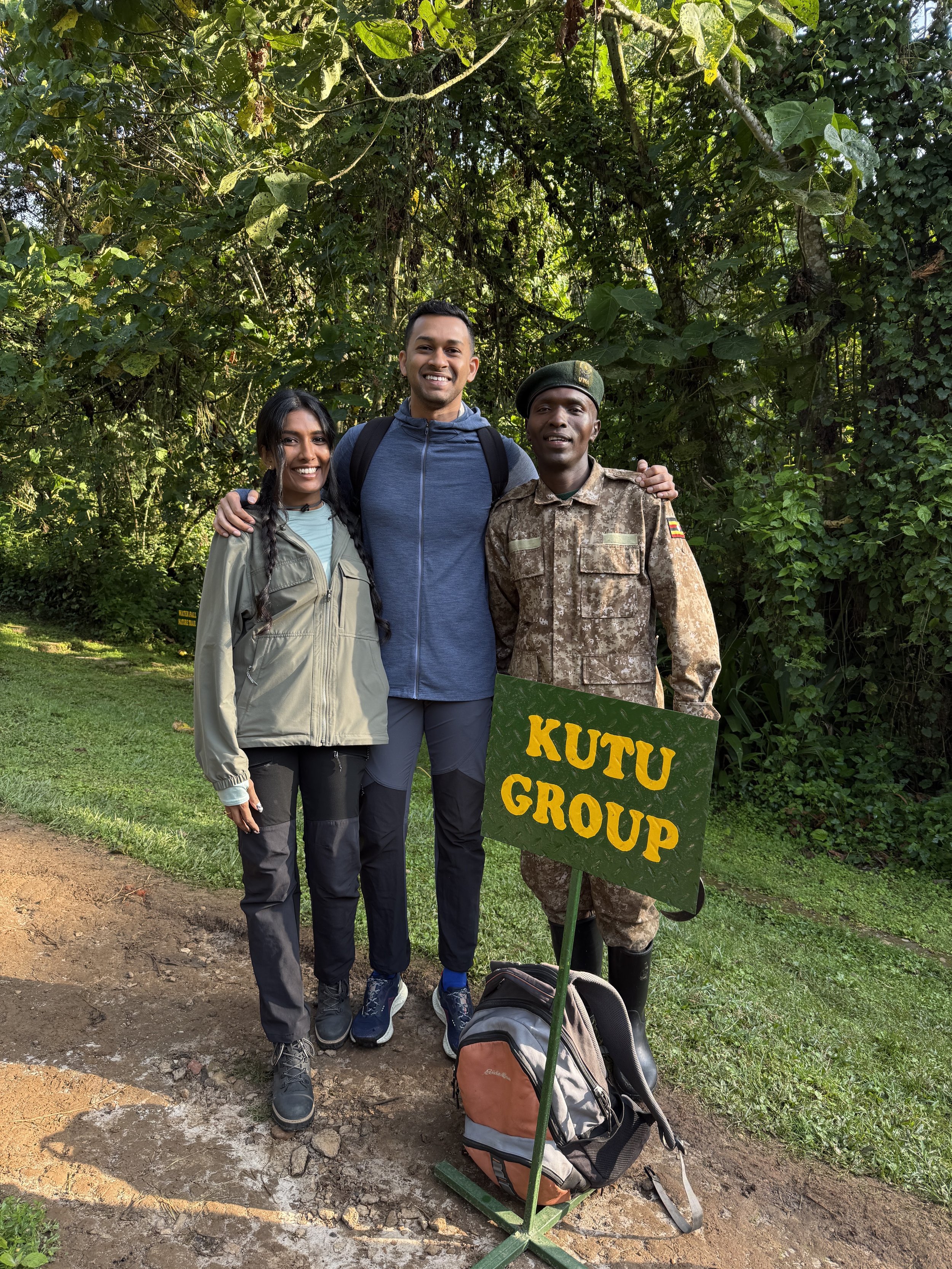
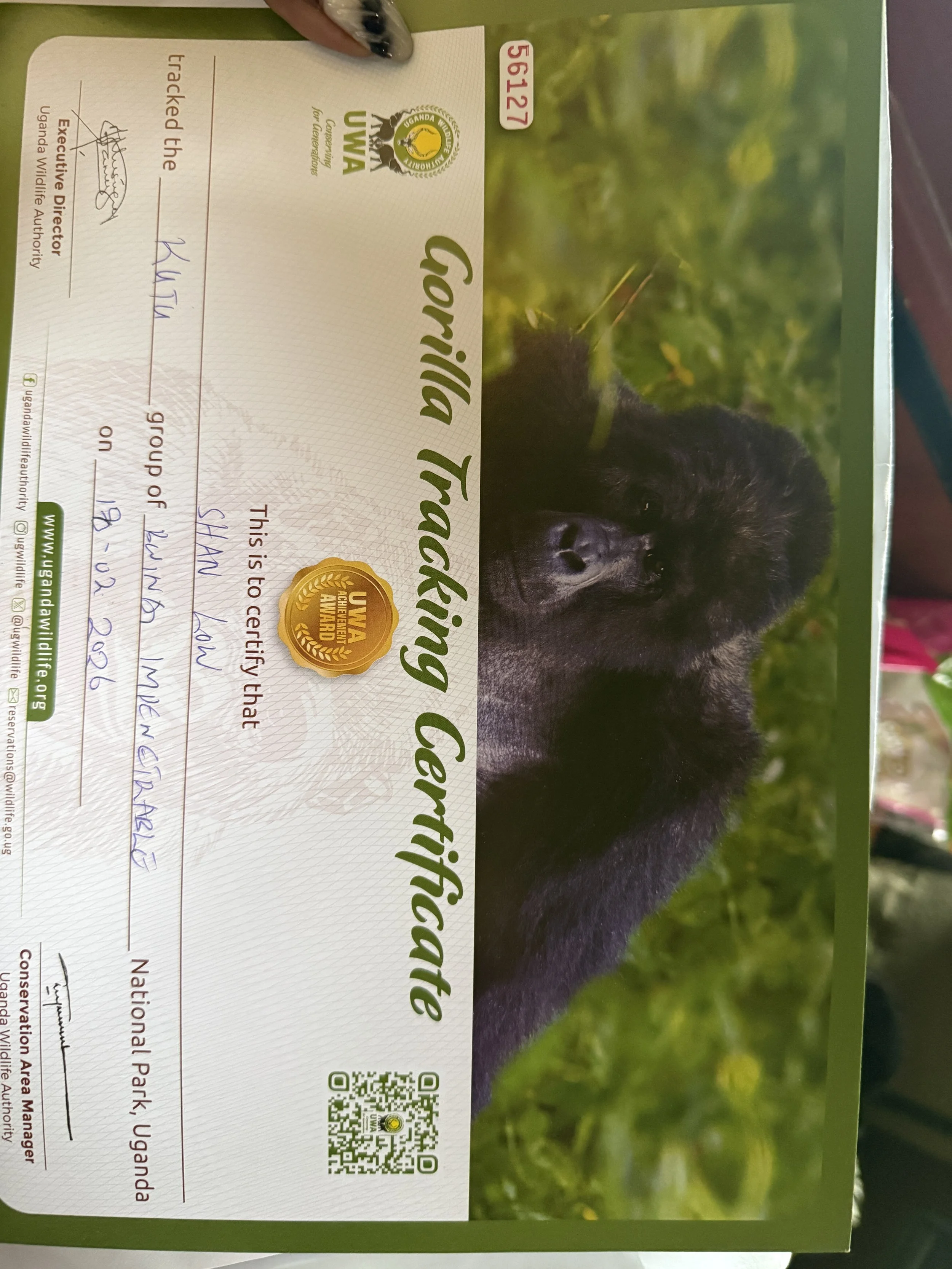
Kutu
I feel you . I do not like the rain too
Four Gorillas Lodge
Perched on a hillside overlooking the lush valleys surrounding Bwindi Impenetrable National Park, the 4 gorillas lodge offered the perfect place to rest before our trek the next morning.
Our cottage blended rustic charm with thoughtful comfort. Built with natural materials and featuring warm wooden interiors, it felt perfectly in harmony with its surroundings. Large windows framed uninterrupted views of the forest, while the private veranda became our favourite spot to simply sit with a cup of Ugandan coffee and listen to the sounds of the jungle. Birdsong echoed through the valley, and every so often, distant calls from the forest reminded us that we were sharing this landscape with some of the world's rarest wildlife.
Dinner was served in the cosy restaurant overlooking the hills, where locally inspired dishes were paired with fresh produce from nearby communities. As darkness settled over the forest, the cool mountain air arrived with it, making the crackling fireplace an inviting place to unwind. The night got pretty cold but thoughtful staff placed hot water bottles in our beds during turndown.
One of the greatest luxuries of staying at 4 Gorillas Lodge was its proximity to the Rushaga trekking sector. With only a short drive ( 20 mins) to the park headquarters the following morning, there was no need for an early, rushed departure. Instead, we could enjoy a leisurely breakfast while watching the mist slowly lift from the forest, appreciating just how special this corner of Uganda truly is.
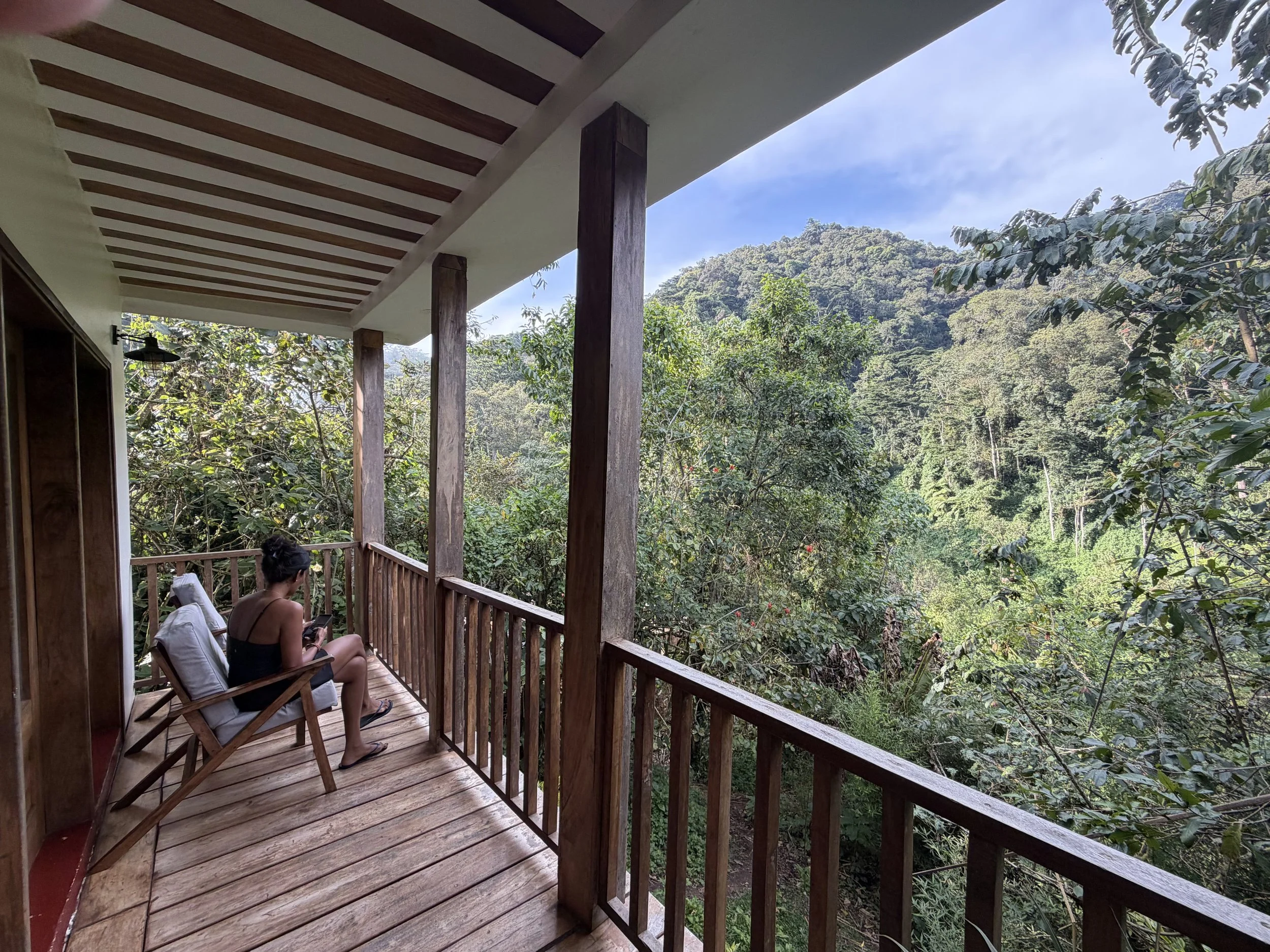
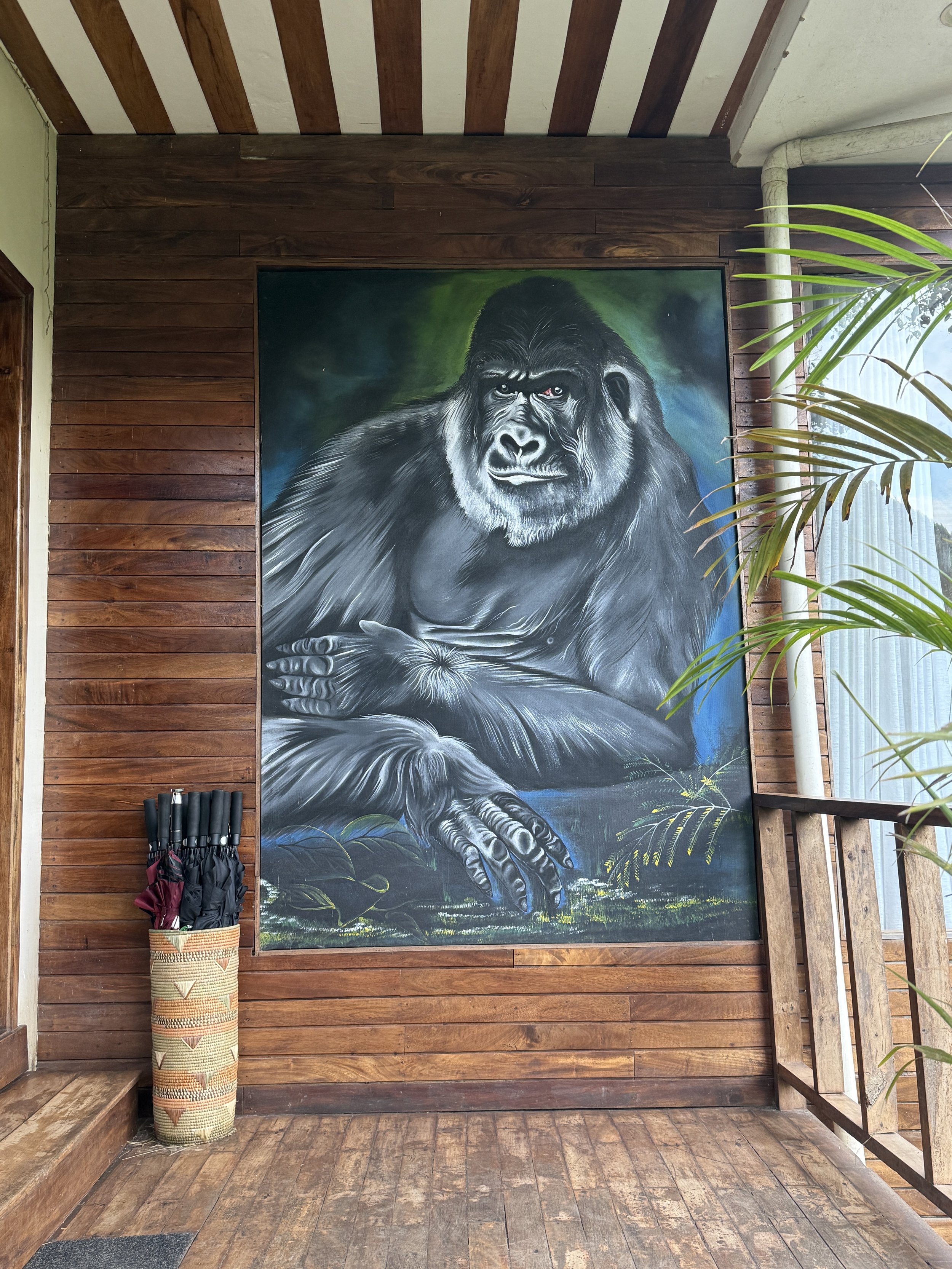
Room Tour
Field Notes:
US$400–500 per person per night (luxury cottage, full board), depending on the season and room type. Book through your safari provider
